Malvertising
Ads carrying exploit kits, drive-by downloads, or malicious scripts. Our AI inspects the full DOM and network requests, comparing fingerprints against live domain-reputation intelligence plus our own behavioral models.
A comprehensive catalogue of bad ads our AI catches on real devices — malvertising, auto-redirects, cloaking, scams and phishing, policy violations, performance and brand safety. Extend it with built-in domain reputation and any custom policy you upload.
Other ad-verification tools deliver a "Malicious" label you cannot audit. Kaminari Ad shows you exactly which rule fired, which reputation signals matched, and what the redirect chain looked like — for every finding.
Ads carrying exploit kits, drive-by downloads, or malicious scripts. Our AI inspects the full DOM and network requests, comparing fingerprints against live domain-reputation intelligence plus our own behavioral models.
Creatives that hijack the page and force-redirect users to unrelated landing pages. We track the full redirect chain across hops and flag any unauthorized destination, even when triggered by user-agent or geo conditions.
Fake celebrity endorsements, "guaranteed returns" landing pages, lookalike exchange domains. The AI reads landing-page copy in context — not just keywords — and matches against known scam narrative patterns.
Fake virus warnings, "your computer is infected" full-screen popups, fake Microsoft/Apple support numbers. Detected by visual pattern matching plus behavioral analysis of dialog-spawning scripts.
Credential-harvesting forms disguised as bank, social, or SaaS login pages. We compare every form on the landing page against known-good login flows from 200+ major services.
Deepfaked or photoshopped celebrities promoting financial products, supplements, or "morning routine" scams. Our AI flags unauthorized likeness use across creative imagery and video frames.
Serving one creative to verification systems and another to real users. Because we use real iPhones, Androids, and Windows PCs on residential IPs, bad actors cannot tell us apart from real users — they have nowhere to hide the dirty version.
Unsubstantiated health, financial, or earnings claims — "FDA approved," "earn $5,000/week guaranteed." The AI evaluates claim plausibility and required disclaimers against your policy or industry standards.
Non-mainstream creatives leaking into mainstream inventory. Our vision model classifies every visible frame and flags creatives that violate your safe-content tier policy.
Unauthorized use of your brand assets by affiliates, lookalike landing pages, and competitor impersonation. Upload your brand-safety policy and the AI enforces it across all incoming creatives.
Heavy ads, autoplay-with-sound, oversized creatives, intrusive overlays — anything that breaches IAB LEAN or Better Ads Standards. Reported with the exact spec rule violated.
Creatives that exfiltrate user data via tracking pixels, fingerprinting scripts, or unauthorized third-party calls. Detected via real-device network inspection.
Creatives consuming excessive CPU or memory — triggering Chrome's Heavy Ad Intervention. We measure actual resource usage on real devices and flag anything that would impact user experience.
Landing pages on TLDs over-represented in malware datasets (.click, .top, .xyz). Cross-referenced with our domain-reputation intelligence, refreshed daily.
Parked domains, MFA (made-for-arbitrage) pages, content farms. Detected by content density, ad-to-content ratio, and reading-level analysis.
Creatives that fail to load, render blank, or trigger console errors on real devices. Caught before they waste impressions.
The system tags above are just the floor. Upload your acceptable-use policy in plain English and the AI evaluates every creative against your rules — no rigid system taxonomy required.
policy: "no_diet_supplements" — Reject any creative claiming
weight loss, body recomposition, or appetite suppression.
Allow vitamins and general wellness products.
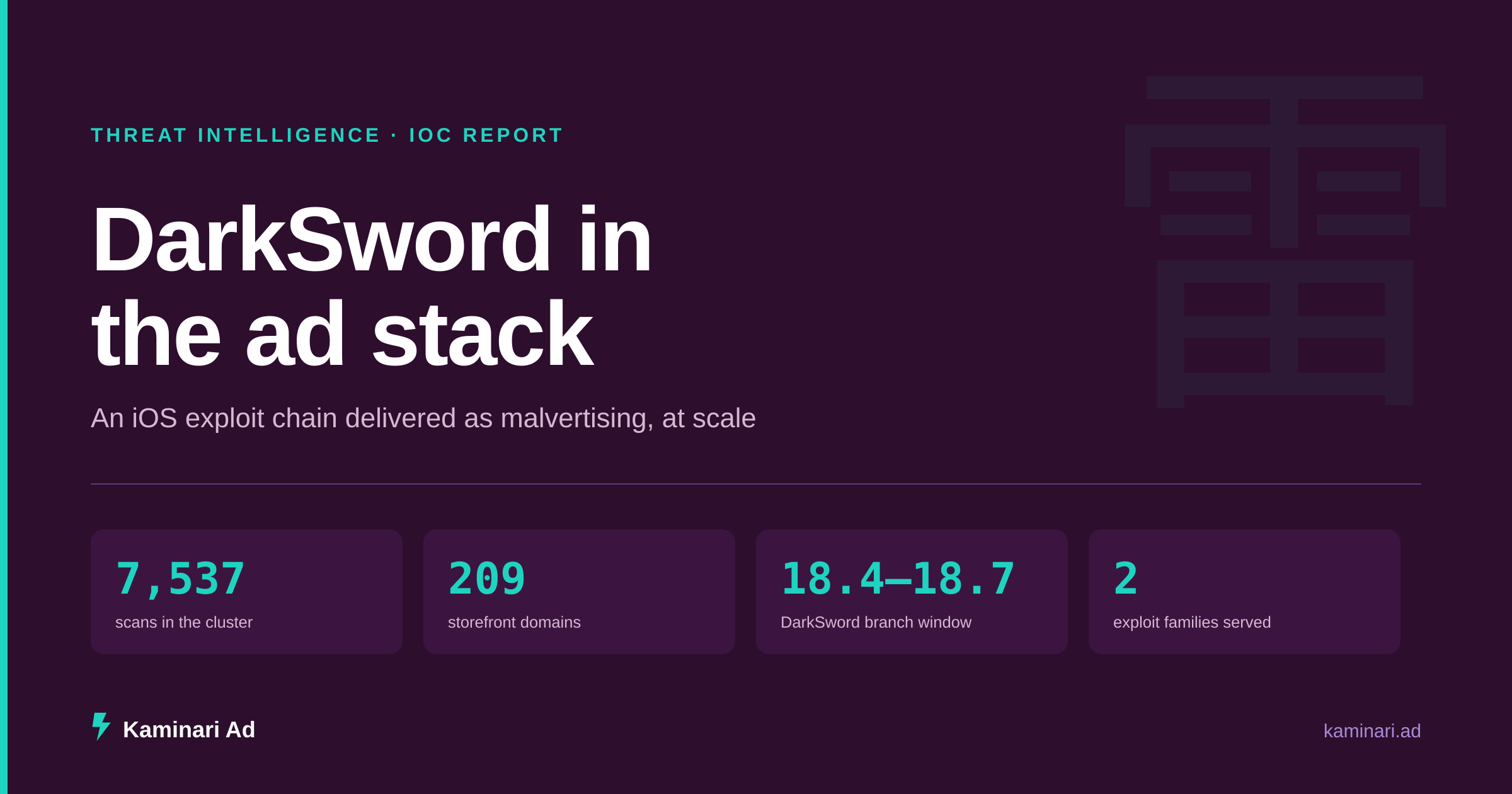
Campaigns we caught in live ad traffic — with indicators, detection guidance and what it means for ad networks and publishers.
Five minutes from signup to first scan. Pay per scan, no contracts.